The Five Stages of Grief, Upon Realizing Adulthood Is a Chronic, Incurable Condition
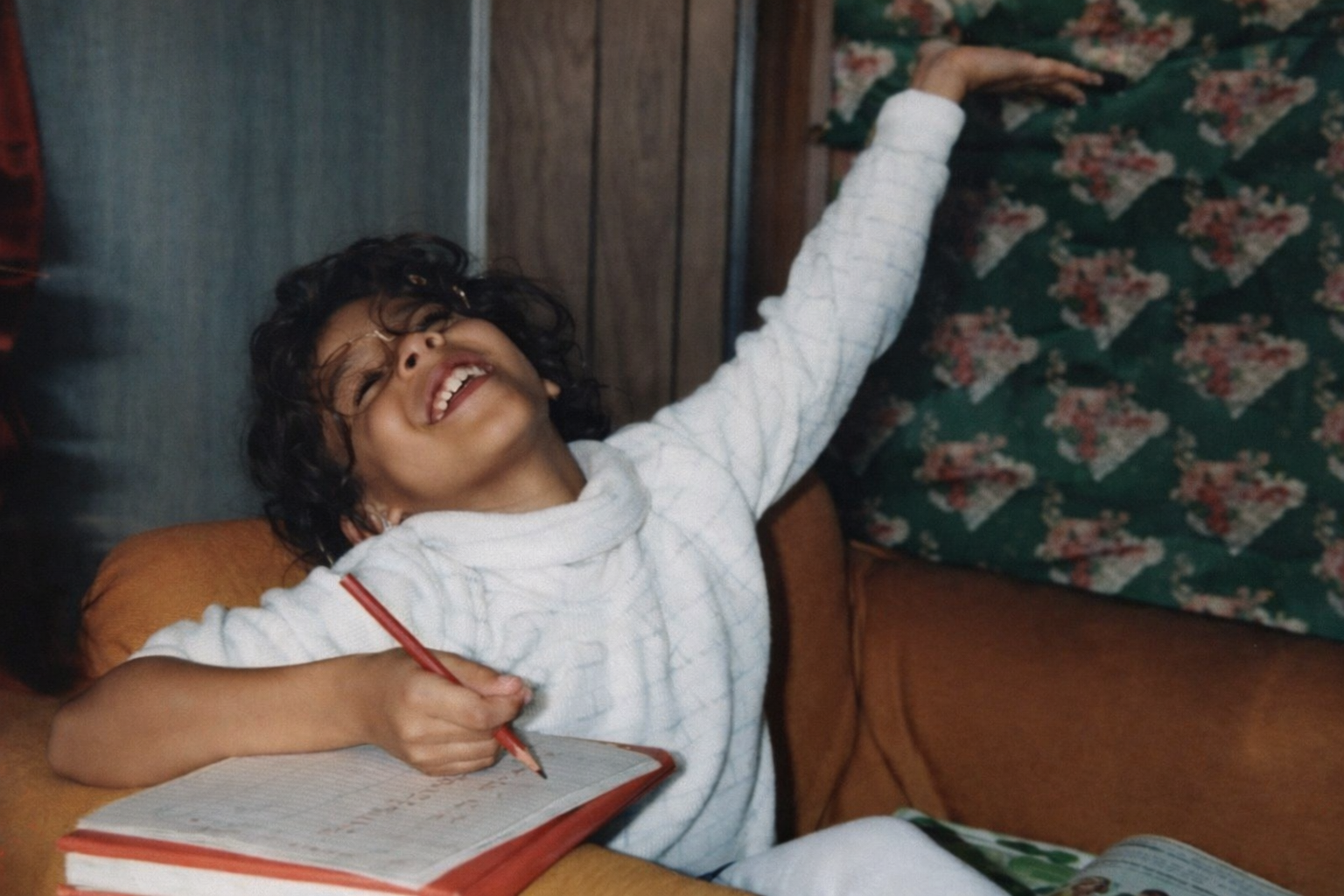
**This piece was originally conceived as an audio meditation on that reckoning. After what feels like a forty-six–year trial period, I often find that when I look for the “unsubscribe” button for adulthood, what I find is the underlying question that still feels useful: what happens when we stop treating adulthood as something to conquer and start treating it as something to live inside? That’s where curiosity enters—not as optimism, but as strategy.**
There’s a moment—usually quiet, usually inconvenient—when adulthood reveals itself not as a phase, but as a condition. Not a milestone you pass through. Not a badge you earn. A condition. One with no known cure, intermittent flare-ups, and a tendency to surface just when you thought you’d learned how to manage it.
Growing up and becoming an adult are often treated as the same thing. They aren’t. One is a process that is happening all the time, we’re always “growing up." Adulthood arrived quietly and never left. I don’t want to exit this life, exactly—adulting has been giving “pyramid scheme” vibes for generations. I would like to upgrade my subscription plan, or opt out of the newsletter. A different tier with fewer emails.
Thanks for reading Elegant Rebel ! This post is public so feel free to share it.
Adulthood doesn’t begin with graduation, the first job, marriage, or starting a family. New studies show that the human brain isn’t fully developed until we’re 30 years old…it used to be 25. There’s no instruction manual, no certification. You don’t grow out of it. It’s an ongoing condition—one that can be managed, sometimes treated, but never cured. There is no return to the carefree life of youth, no undo button that restores ease once you’ve learned what you now know.
The way we describe adulthood is hella reductive.
We frame it as basic logistics: paying bills, cook your own meals, clean up after yourself. As if the living is succession of administrative tasks. As if you wake up one day knowing who you are, what you want, and how to get there without hesitation.

Two things surprised me most when I became a “grown-up” (a title that feels like I’m wearing shoes that are too big). The first was how easy it is to become cynical. The second was how difficult it is to stay present.
Why does growing up do this to us? Is the present so uncomfortable, so unstable, that it’s easier to live in a future that doesn’t exist yet— or retreat into a past that’s already been written?
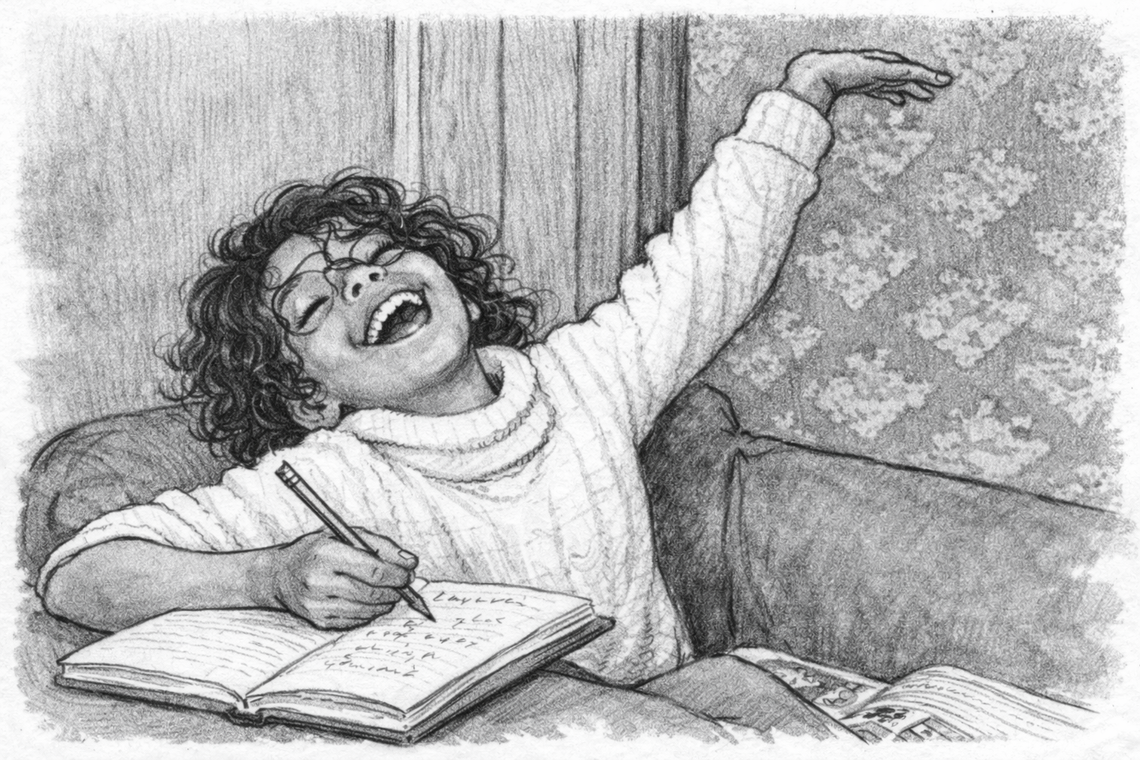
As a kid I was shy and introspective, but unapologetically optimistic. I believed the world was generous, and that people, while strange, were generally kind and smart. I trusted that listening to your heart and following the formula would lead you where you needed to go. Unlike most kids, I didn’t understand why adulthood was so appealing, maybe because the examples of it were just pictures of hard work and lots of anxiety. I didn’t want to be an adult, but I also knew I couldn’t fight the inevitable. That was a dragon to big to slay.
Somewhere between twenty-two and twenty-five—a deliberately vague window, because the list of contributing moments is long—that worldview began to change. Cynicism crept in. Presence became harder. My thinking sharpened, but it also grew heavier.
The realization that the world is inherently generous or fair. The world is actual indifferent and it’s on us to give our lives meaning. Watching people you love suffer through hardship, sometimes relentlessly, with no clear reason or reward. It makes you guarded. Less willing to risk hope.
Heartbreak and disappointment chip away at innocence gradually. You learn that not everyone is kind, that many people are primarily self-interested, and that trust is not always reciprocated. It’s sobering.
Jane Austen once referred to “the effects of education,” a phrase I’ve always loved. Adulthood educates you—often in great detail—about the world’s problems. Awareness deepens. Simplicity dissolves.
Adulthood also made me my own harshest critic. With age comes discernment, but also doubt. You stop taking things at face value. You interrogate your choices, your worth, your trajectory. Life feels heavier not because it is worse, but because you are more awake to its complexity.
The erosion was gradual. Confidence didn’t disappear all at once; it thinned at the edges. Cynicism ate away at certainty until I felt exposed, as if being an adult wasn’t something anyone could sanction for you—that the feeling of finally being an adult was just that: a feeling. Fleeting. Unreliable.
And maybe that’s what life is: a series of feelings we agree to treat as real.
This is where grief enters—not dramatically, but persistently. Most of us expect grief to follow a familiar emotional arc.
What we tend to miss—what no one seems to teach us—is that the transition into adulthood comes with its own quiet losses: time, ease, proximity, certain versions of the self. We’re encouraged to move through these changes efficiently, without lingering, to treat them as upgrades rather than endings.
But they are endings.
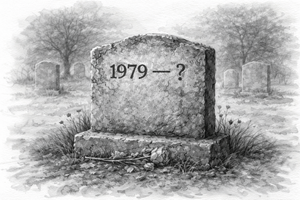
They arrive in small doses, often unnoticed. Your body registers them before your mind does. By the time you’re aware of what’s gone, you’re grieving Saturday morning cartoons, catching fireflies, the unstructured hours that once belonged entirely to you.
Adults are especially good at dismissing these losses, as if minimizing them makes the grief smaller. It doesn’t. It just delays the reckoning—and with it, the chance to learn how mourning actually works.
Learning how to grieve early, in smaller ways, could serve as a kind of preparation. Not to harden us, but to familiarize us with the terrain. Because adulthood doesn’t stop offering losses to practice on. Jobs end. Lives end. Relationships change. Friendships fade. Passions shift. Bodies fail. Parents age. Family structures rearrange themselves. Health becomes uncertain. Time feels increasingly finite. The list is, in fact, endless.
What changes—if we’re paying attention—is not the presence of grief, but our relationship to it. Whether we treat it as something to be avoided at all costs, or as a process we are allowed to learn.

The five stages of grief are often presented as a sequence, which is charming in the way optimistic diagrams tend to be. In practice, they behave more like a recurring cast of characters—entering, exiting, overlapping, occasionally staging an encore.
Denial shows up as momentum. You’re busy. Things are fine. This is just how life works now. You’ll deal with it later.
Anger disguises itself as irritation, resentment, a low-grade fury at systems and schedules. Why does everything require so much maintenance? Why does stability feel exhausting?
Bargaining arrives dressed as self-improvement. If I optimize enough—my habits, my body, my career—I can outrun the losses. This is the stage most likely to be monetized. It is also where grief pretends to be solvable.
Depression doesn’t always announce itself as sadness. Often it’s fatigue. The quiet realization that some things are not coming back—not because you failed to manage them properly, but because time has moved on without consulting you.
Acceptance, when it appears, is frequently misunderstood. It isn’t cheerfulness or closure. It’s the sober recognition that loss is not an interruption to adulthood, but one of its defining features.
None of this happens in order. You may accept one loss and deny another. You may bargain in the morning and feel furious by lunch. This is not a malfunction. It’s the curriculum.
What the stages don’t explain—what adulthood teaches eventually—is scale.
Grief doesn’t resolve itself by progressing neatly from one phase to the next. It doesn’t shrink with time. What changes is not the grief, but the life around it.
Psychologist Lois Tonkin describes this in what’s known as The Jar Model of Grief, or Growing Around Grief. Imagine grief as a marble inside a jar. At first, the jar is small. The marble takes up nearly all the space. It presses against every surface of your life.
Over time, the jar grows. Life expands—slowly, unevenly, often without permission. New relationships, routines, identities, losses, responsibilities. The marble remains the same size. What changes is proportion.
This is why grief can feel sudden years later. Not because you’ve failed to heal, but because the marble is still there. Sometimes it rests quietly at the bottom of the jar. Sometimes it rolls hard against the glass when something jolts the container.
Adulthood, then, is not the absence of grief, but the accumulation of jars. Loss stacks: jobs, friendships, versions of the self, time, certainty, health, parents, family structures. The list is long and, in practice, endless.
This is the missed education of early adulthood. We’re taught how to achieve, optimize, and endure—but rarely how to mourn. Rarely how to let loss be real without letting it be total. Rarely how to grow a life large enough to hold what will inevitably remain inside it.
Seen this way, adulthood isn’t something you conquer. It’s something you learn to carry.
The optimistic, curious child isn’t gone. She’s just buried. I reach for her still—beneath the layers of doubt and self-protection. And while there is no formula for becoming an adult, there are moments that remind you why it’s worth staying.
The first time you refuse to be treated poorly.
The first time you forgive someone who hasn’t earned it.
The moment you look in the mirror and recognize yourself—not as who you were supposed to be, but as who you are.
Grief doesn’t end.
Adulthood doesn’t resolve.
But a life can grow large enough to hold both.