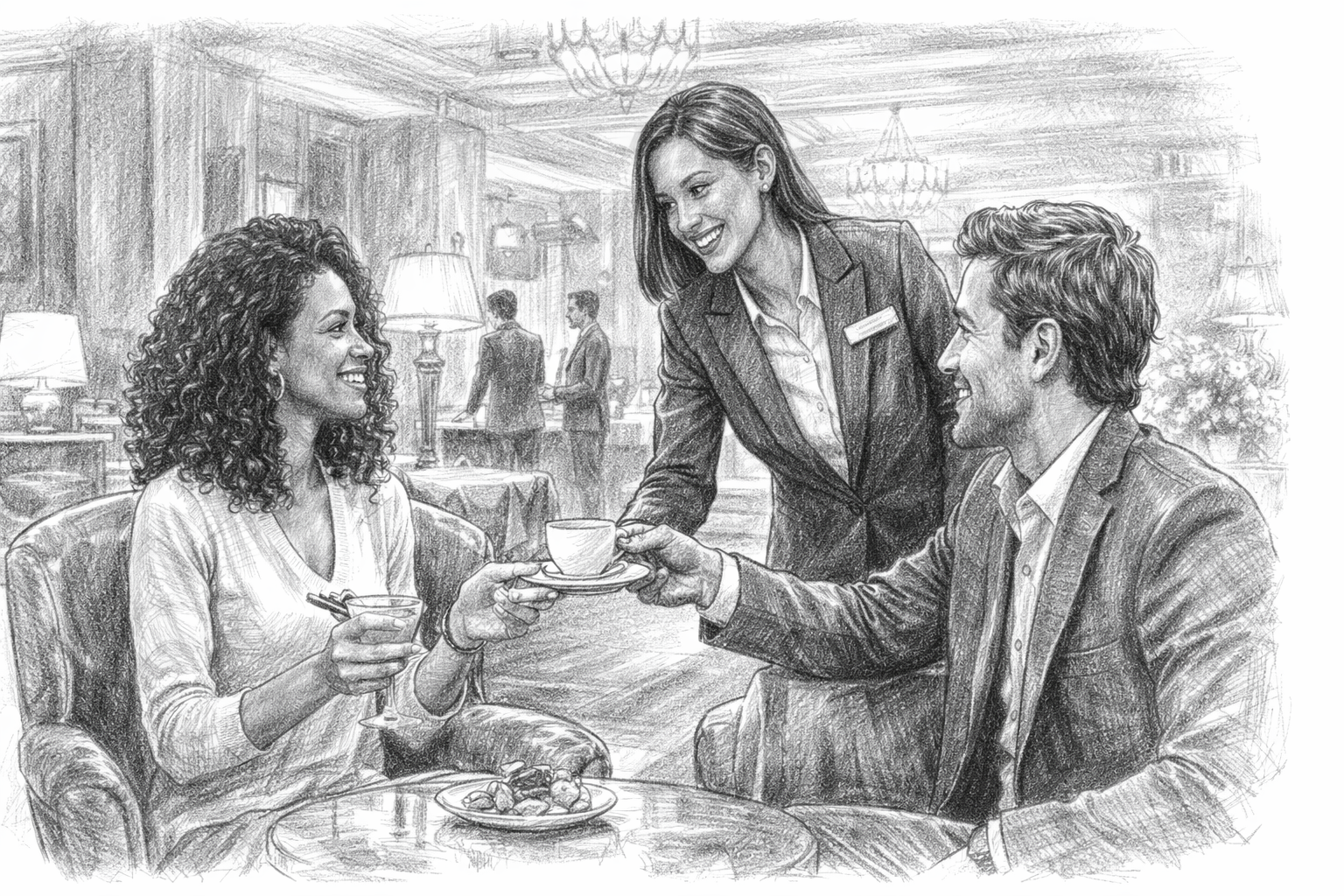
Hospitality is one of those things we recognize immediately when it’s present—and feel acutely when it’s not. It’s rarely announced. It doesn’t need to be. Like good lighting or a well-timed silence, it works on us quietly, shaping how safe, seen, and welcome we feel.
I’ve come to think of hospitality less as an industry and more as a way of moving through the world. A posture. A daily practice of attention. It’s not about politeness or performance, but about intention—the choice to meet life, and the people in it, with generosity and care.
When we talk about memorable hotels or restaurants, we often point to the room, the meal, or the design. But what lingers is usually something harder to name: the feeling of being anticipated rather than managed. Hospitality, at its best, creates that feeling. And yet, for all the energy we devote to curating experiences for guests and customers, we tend to overlook the quiet, ordinary opportunities for hospitality in our everyday lives.

It begins with a subtle shift in mindset. Hospitality asks us to approach interactions—both with others and with ourselves—with curiosity instead of assumption. To slow down enough to notice what’s actually needed. Sometimes that’s warmth. Sometimes it’s space. Sometimes it’s nothing more than being fully present.
Our spaces play a role here. A hospitable space doesn’t need to be grand or expensive. It needs to feel considered. A chair pulled closer. A window cracked open. A room that seems to say, you can stay awhile. Extending that same care inward—meeting yourself with empathy rather than urgency—is part of the practice, too.
There’s a certain authenticity to truly hospitable people and places. Not the curated kind, but the steady, unforced sincerity that makes others relax. Authenticity builds trust. It invites participation. It allows people to arrive as they are, without armor. In that sense, hospitality is less about hosting and more about permission.
At its core, hospitality is relational. It deepens connection through listening—real listening, the kind that isn’t waiting for its turn to speak. We all know the subtle sting of being talked over, and the quiet relief of being genuinely heard. Presence matters. Attention matters. These are the invisible luxuries.
This is where I find myself thinking about the future of hospitality—not as a question of technology or efficiency, but of humanity. As our lives become faster, louder, more optimized, the most radical offering may be slowness. Care. The ability to notice and respond to the emotional, physical, and mental states of the people around us.
Sometimes hospitality looks almost too simple to count: showing up when it would be easier not to, making space for someone else’s interior life, choosing attentiveness over distraction. These gestures don’t scale easily. They aren’t flashy. But they endure.
And perhaps that’s the future worth imagining: a world where hospitality is not something we outsource to industries, but something we practice daily—a quiet, generous thread running through how we live, work, and care for one another.
Hospitality needs a place to serve. It becomes visible at the table—where care turns tactile, where attention is tested by distraction, where generosity is either practiced or withheld in small, telling ways. Dining is hospitality in motion. It reveals what we value, how we relate, and who we make room for. And as our lives grow louder and more accelerated, the act of sitting down together—without rushing, without optimizing—begins to feel less like a habit and more like intention.
Perhaps this is where the conversation begins to shift. Not toward spectacle or scale, but toward the quieter questions: how we feed one another, how we design spaces that allow people to exhale, how we honor labor that is attentive rather than efficient. In a future that will ask us to move faster and automate more, hospitality may become less about what we can offer and more about how we offer it. What we notice. What we protect. What we choose to make room for. These are small gestures, but they carry weight. And they may be the most enduring form of luxury we have left.
This essay is part of an ongoing exploration of hospitality, food, and the future of care.
Tiffani