A Life Interrupted
I learned my life expectancy over a weekend, online, alone, mid-scroll, with a cup of coffee going cold next to me. There was no announcement. No warning. Just a number, presented calmly, as if it were weather. That’s not the way to ask anyone to carry the weight of that kind of information.
I have vascular Ehlers-Danlos syndrome, vEDS.
It’s a rare genetic connective tissue disorder, accounting for about five percent of all EDS cases. “Connective tissue” sounds innocuous until you remember it’s the stuff that holds you together—arteries, organs, the structural integrity of the body itself. In vEDS, that structure is fragile, which is why it’s considered one of the most severe forms of Ehlers-Danlos syndrome because of its life-threatening complications, but it isn’t considered terminal.
A quick explainer
Ehlers-Danlos syndromes (EDS) are a group of inherited conditions that affect connective tissue.
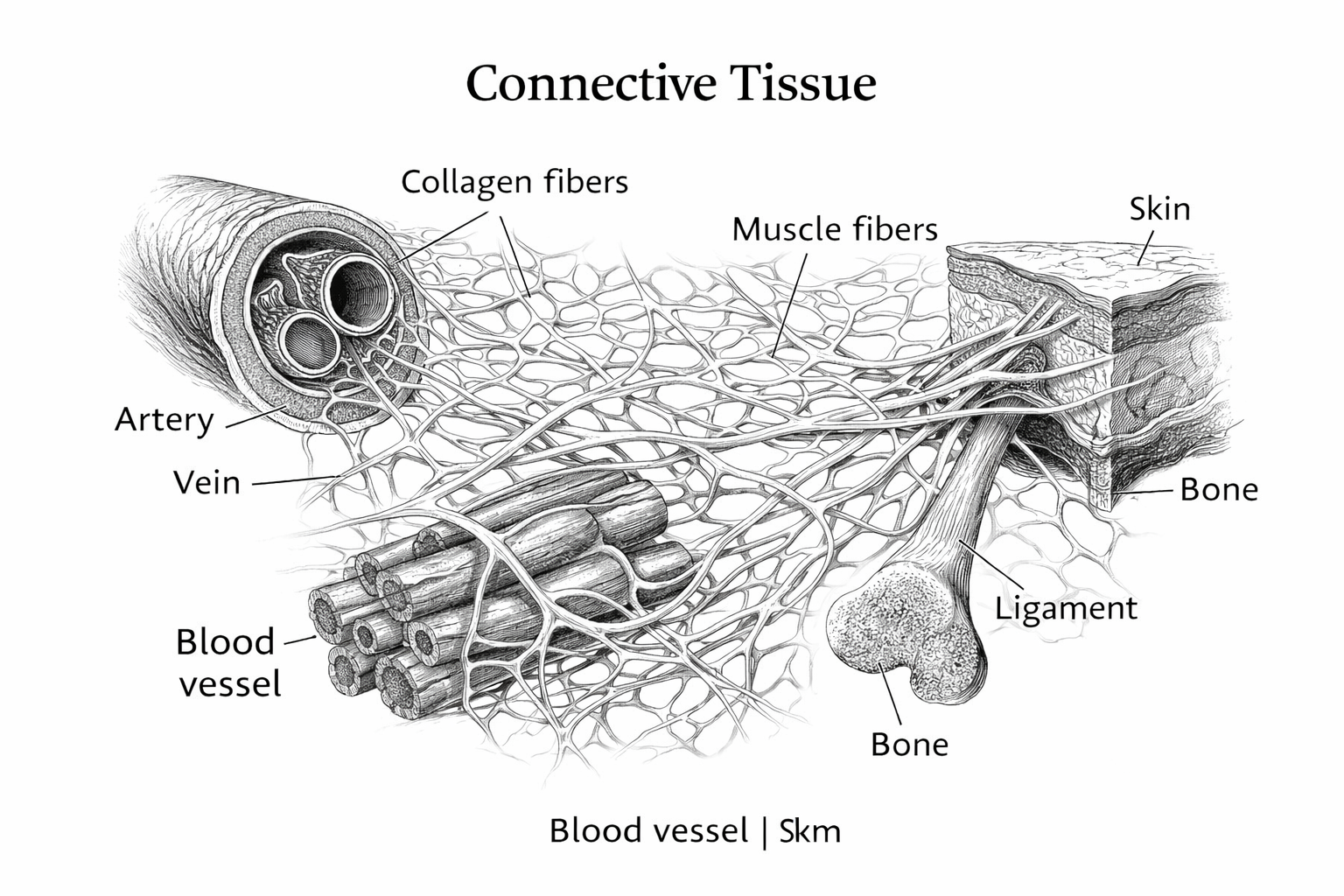
Connective tissue is exactly what it sounds like: the material that holds the body together and helps it work as a system. It provides strength, structure, and flexibility. You’ll find connective tissue almost everywhere—in the skin, joints, blood vessels, organs, muscles, and ligaments. If you think of the body as a building, connective tissue is part of the frame, the wiring, and the glue.
In EDS, this tissue does function properly.
vEDS is caused by a genetic change that affects collagen, a key building block of connective tissue. When collagen is fragile, blood vessels and some organs can also be fragile. This can lead to serious medical events like artery tears, aneurysms, or organ ruptures, often beginning in adulthood.
vEDS is present from birth, even if symptoms don’t show up early. Many people live for years managing daily pain, fatigue, joint instability, and slow healing before experiencing more serious complications.
Living with vEDS often means navigating a blend of chronic illness and sudden risk—long stretches of careful management, paired with the knowledge that emergencies can happen without warning.
Because vEDS is rare, research is limited. Early diagnosis, regular monitoring, and preventative care can help reduce risks, even though uncertainty remains part of everyday life.
The medical literature is very clear about this. Spontaneous arterial dissections. Aneurysms. Ruptures. Gastrointestinal perforations. These events tend to begin in early adulthood, often without warning. They are dramatic, acute, and life-threatening. I didn’t “develop” vEDS over time, but symptoms often become more apparent with age, hormonal changes (perimenopause entering the chat and being a particularly enthusiastic contributor), or injury.
Like so many things, life expectancy is on a spectrum…a body living with vascular Ehlers-Danlos is no different; it varies widely from 10 to over 80 years. The reported median life expectancy is fifty-one years. 51. With early detection and preventative care, some studies suggest fifty-five.
I’ll be forty-seven this summer.
I’ve already experienced more than one of the complications listed so neatly in those studies. Which is one of the strange things about living with a condition like this: it expresses itself as both chronic illness and sudden catastrophe. It’s not just pain, though there is plenty of that. It’s not just exhaustion, though that is constant. It’s also the ever-present possibility that something major might happen—quickly, decisively, and without consulting your calendar.
When I read the number, I didn’t feel fear. No cinematic dread. No urgent montage of things I suddenly needed to do before time ran out.
My first thought was: This is absurd.
Not tragic. Not unfair. Absurd.
There is something deeply strange about turning a life into math. About discovering that somewhere, statistically speaking, there is a median version of you who does not get to keep going. A bell curve where your body has already been quietly filing paperwork.
I didn’t tell anyone right away. Not because I was hiding it, but because I didn’t know what telling would accomplish. I eventually told my therapist. Then, a few days later, a friend. Then others, slowly. I kept my tone light. I made jokes. I treated it like an interesting, slightly unhinged fact—because sometimes that’s the easiest way to let information exist without asking it to perform.
Talking about your own mortality is a surreal experience. There is no correct register for it. Too serious and people panic. Too casual and they don’t know where to put their concern. You become responsible not just for the information, but for managing everyone else’s emotional response to it.
So mostly, I said nothing.